融資信息
融資信息
 專題
專題
 鏈上生態
鏈上生態
 詞條
詞條
 播客
播客
 活動
活動
 OPRR
OPRR


BIP-361提案争议升級:需要為對抗量子計算,凍結中本聪的比特幣嗎?

Original Title: "Freezing Satoshi's Bitcoin? BIP-361 Proposal Sparks Community's Most Heated 'Quantum Threat' Debate"
TechDeep Dive: Bitcoin developer Jameson Lopp and others formally submitted the BIP-361 proposal on April 14, planning a three-phase phase-out of ECDSA and Schnorr signatures, ultimately freezing all early wallets not migrated to quantum-resistant addresses.
The proposal involves around 1.7 million BTC in P2PK addresses (including around 1.1 million from Satoshi, worth about $74 billion in holdings), with about 34% of the Bitcoin network at risk of quantum attacks due to exposed public keys. The proposal was met with fierce criticism from the community, with critics calling it "authoritarian confiscation." However, Lopp responded that he would rather freeze 5.6 million dormant BTC than let them fall into the hands of quantum hackers.
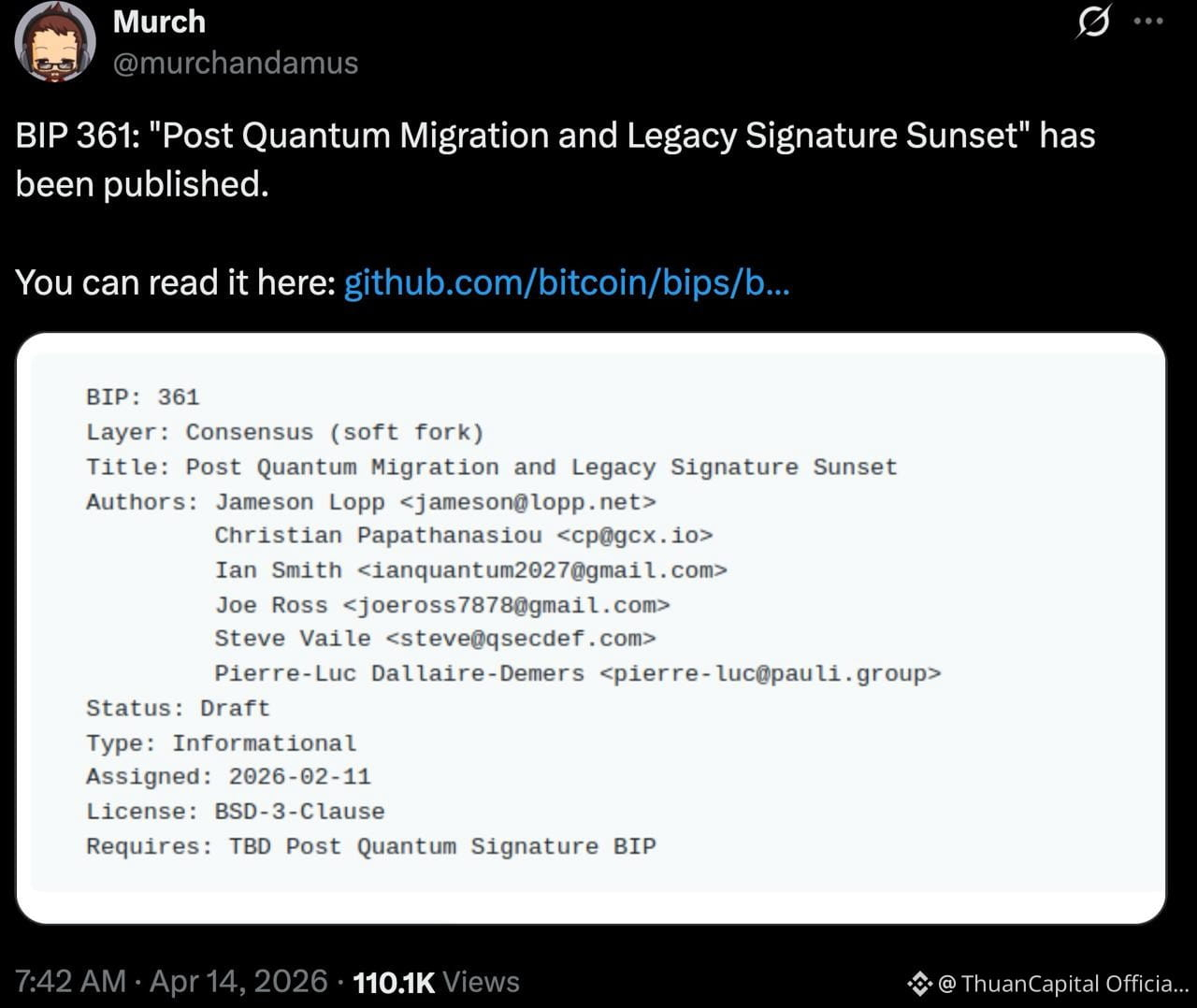
Well-known cypherpunk and Casa CTO Jameson Lopp, along with five researchers, submitted a draft proposal called BIP-361 to GitHub's bitcoin/bips repository on April 14, titled "Post Quantum Migration and Legacy Signature Sunset."
The core proposition of this proposal is straightforward: before quantum computers can break the existing encryption algorithms, the network should proactively freeze all Bitcoin wallets relying on older signature schemes.
According to CoinDesk, Lopp stated in an interview that he does not currently believe these measures need to be implemented immediately, but stressed that he is "thinking defensively against potential future threats." He further admitted on Platform X: "I know everyone doesn't like this proposal. I don't like it myself. But I wrote it because I dislike another outcome even more."
Three-Phase "Sunset Plan": From Restriction to Freeze
BIP-361 builds upon the foundation laid by BIP-360 released in February this year. BIP-360 proposed a new address format called P2MR (pay-to-Merkle-root), similar to the existing Taproot address but without the key path vulnerable to quantum attacks, providing forward security for new coins.
BIP-361 要解決的則是存量問題:截至 2026 年 3 月 1 日,全網超過 34% 的比特幣已在鏈上暴露公鑰,這一數據直接來自 BIP-361 文件本身。
提案設計了三個递進階段:
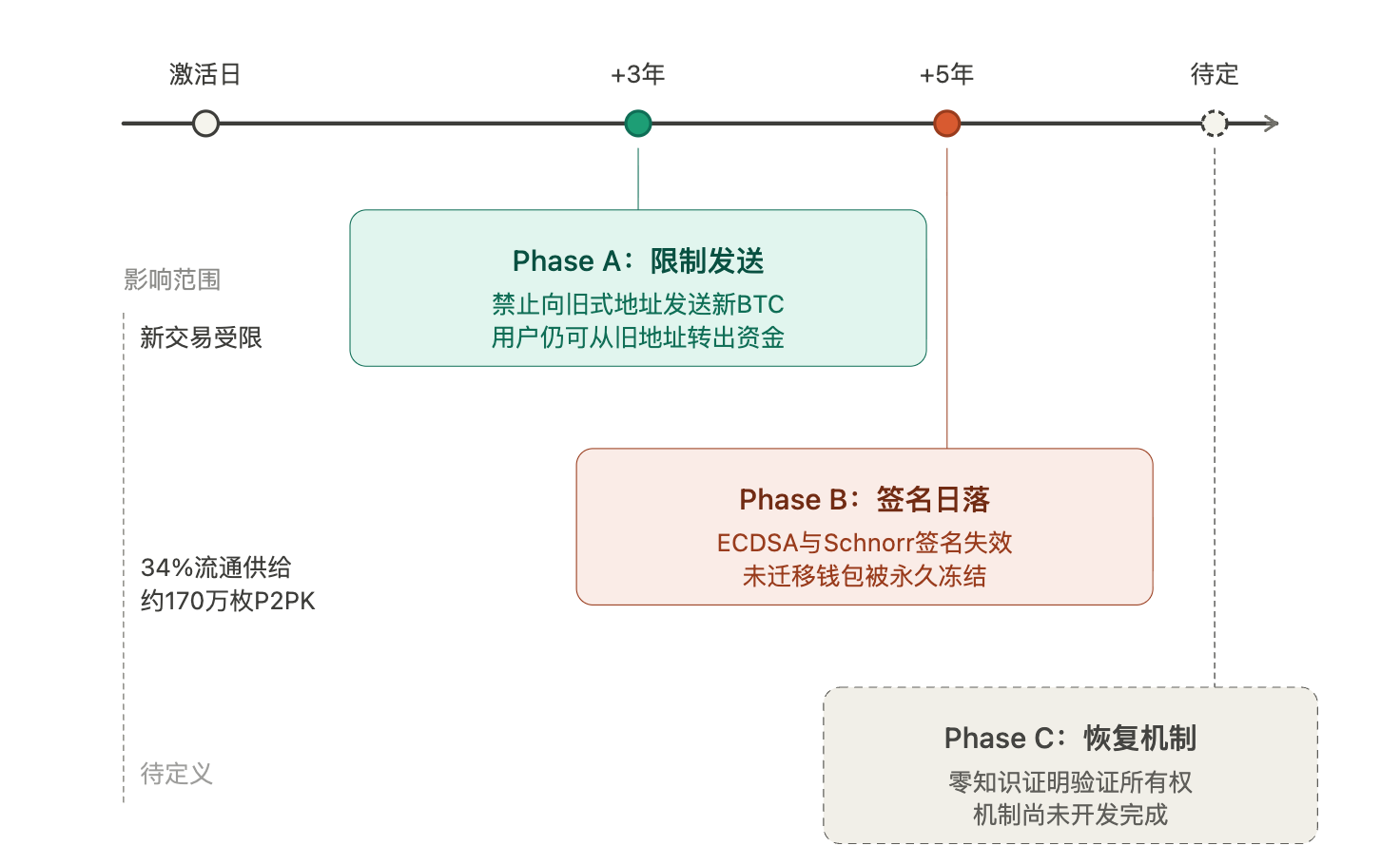
Phase A 在啟動約三年後生效,屆時網絡將禁止向舊式地址發送新的 BTC,所有用戶應已遷移至抗量子地址類型。
Phase B 在啟動五年後生效,屆時舊式 ECDSA 和 Schnorr 簽名將被徹底廢止,任何仍留在脆弱地址中的比特幣將被有效凍結。
Phase C 則是一個尚未完成的救濟機制,設想通過零知識證明(zero-knowledge proofs)讓持有助憶詞的合法所有者恢復被凍結的資金。
據 Live Bitcoin News 報導,GitHub 審查者 Conduition 認為 Phase C 是「任何涉及沒收性凍結提案中最關鍵的組成部分」,並主張在缺乏這一機制的情況下,BIP-361 是不完整的。
提案作者將凍結機制描述為一種「升級的私人激勵」:丟失或凍結的幣只會讓其他人的幣稍微升值,而被量子攻擊恢復的幣則會讓所有人的持有貶值。
560 萬枚沉睡 BTC 與 740 億美元的中本聰持有
這場辯論之所以觸動神經,是因為涉及的規模極爲龐大。
據 Lopp 估計,約 560 萬枚比特幣(占總供應量的 28%)已超過十年未發生任何轉移,他與其他分析師認為這些幣大概率已經丟失。按當前價格計算,這些沉睡代幣的價值約為 4200 億美元。
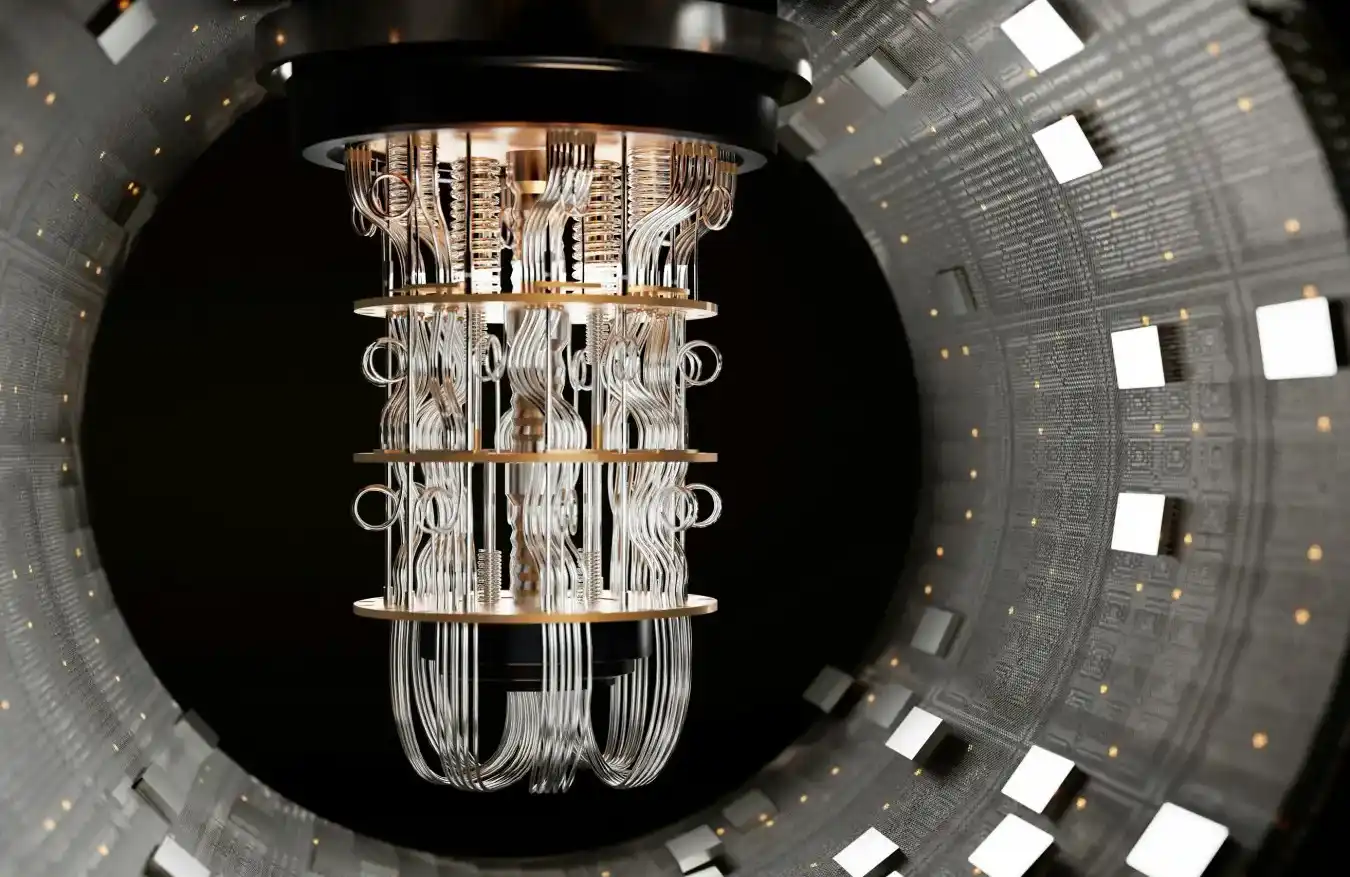
其中最具象徵意義的是中本聰的持有。據 Cointelegraph 報導,早期 P2PK 地址中約鎖定 170 萬枚 BTC,包括中本聰的約 110 萬枚持有,當前價值約 740 億美元。這些地址的公鑰早已在鏈上公開暴露,一旦量子計算機能力達到臨界點,攻擊者可以通過 Shor 算法從公鑰反推私鑰,直接控制資金。
Lopp 在 CoinDesk 採訪中警告,即使不需要大規模拋售,「只要有任何可信的證據表明有人具備用量子計算機恢復丟失或脆弱幣的能力,市場就會立即出現大規模恐慌」。
Polymarket 上「中本聰是否會在 2026 年移動任何比特幣」的賠率目前約為 9.3%,較年初的 4.5% 有所上升,但對 BIP-361 的發布反應溫和,暗示市場仍將其視為治理討論而非緊迫催化劑。
社區激烈反彈:「偷錢來防止被偷」
BIP-361 觸碰了比特幣最深層的哲學信条:所有權不應附帶條件。提案才一公開,批評聲浪迅速湧現。
Bitcoin Magazine 編輯 Brian Trollz 直接否定了該提案;TFTC 創始人 Marty Bent 稱其「可笑」;Metaplanet 業務發展主管 Phil Geiger 諷刺道:「我們必須偷走人們的錢,來防止他們的錢被偷。」
X 平台用戶 Cato the Elder 的評論被廣泛傳播:「這個量子提案具有高度威權主義和沒收性質……沒有任何合理的理由強制升級並使舊的支出路徑失效。升級應當百分之百自願。」
Cysic 創始人、Algorand 前量子抗性負責人 Leo Fan 則從技術治理角度指出:「所有權變成了有條件的。持有密鑰不再保證你能花費。這削弱了比特幣『不可阻擋的貨幣』這一承諾。」不過 Fan 也承認,將數百萬枚比特幣從流通中移除可能會收緊供給,從而推高幣價。
Reddit 社區 r/cryptocurrency 上的討論同樣激烈(該帖獲 631 個贊、311 條評論),最高票評論寫道:「如果你為了對沖投資風險而分叉凍結錢包,BTC 就不再是 BTC 了。」另有用戶持截然相反的態度:「讓他們被黑客攻擊,讓價格崩一個月。我們照樣抄底,跟上次出現生存危機一樣。」
歡迎加入律動 BlockBeats 官方社群:
Telegram 訂閱群:https://t.me/theblockbeats
Telegram 交流群:https://t.me/BlockBeats_App
Twitter 官方帳號:https://twitter.com/BlockBeatsAsia
 相關文章
相關文章